Wednesday, August 29, 2012

18 Cool Ways Colleges Are Using QR Codes

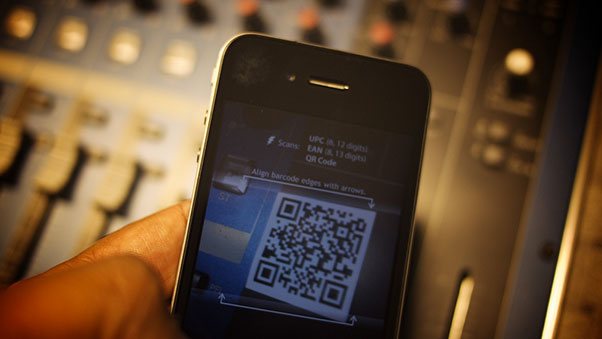
Quick Response codes, popularly known as QR codes, are popping up everywhere from the center of Iron Man’s suit to bottles of wine. Basically a barcode, when scanned, QR codes link to something on the web, from ads to videos and music to surveys. Despite the fact that many young people currently say they’re not likely to scan the codes, colleges are slowly pressing ahead with bringing the tech to their campuses in the hopes of bringing students around. Here are 18 cool ways QR codes are taking root in higher education.

  1. Orientation:

    Washington and Lee University took the words right out of student employees’ mouths. Members of IT Services donned t-shirts imprinted with nine QR codes on the front that when scanned led to web pages with helpful information on things like passwords, Sakai, and how to contact the help desk. On the back were codes for getting around campus and town. Makes sense; have you ever tried to talk to an IT person?

  2. Campus publications:

    In 2010, the University of Arkansas included QRs in its magazine Research Frontiers. The codes allowed readers access to educational videos and slide shows like art professor Kristin Musgnug’s “Un-Natural Histories – Paintings of Invasive Species.” This could be one of the most promising uses of QR codes, as it significantly bridges the gap between print and digital media.

  3. Network:

    Instead of just promoting themselves, schools like Abilene Christian University are using QRs to help students connect with each other. ACU’s getGO app reads codes and lets students send texts and emails, add contacts and calendar events, and find places on a map.

  4. Admissions posters:

    Instead of following the trend of college recruiting posters placed in high schools that feature an inviting picture of a school’s campus, New York’s Hamilton College changed the game by making their poster simply a giant QR code with the word “Hamilton” underneath. The code links to a web page of not one but 11 photos of life on Hamilton’s lovely campus. It seems to be hitting its target audience: adults are confused while teens are scanning away.

  5. Mobile tagging:

    Often students and faculty members can forget (or were never told) about the history behind buildings, statues, or memorials on their campus. Schools like Johnson County Community College affix QRs to these structures in a practice called “mobile tagging” to allow curious passers-by to scan and be enlightened.

  6. Billboards:

    The University of Bristol in the U.K. recently ran a six-week ad on a billboard using QR technology to direct commuters at London Paddington Station to a VIP section of its website. What made the ad especially interesting was the shape of the QR code. Instead of the usual Rorschach-esque black box, the code was designed in red in the shape of the Clifton Suspension Bridge that links Bristol to nearby Clifton.

  7. Social media:

    Of course, colleges are using QR codes to drum up hits on their Facebook pages, Twitter accounts, YouTube channels, blogs, home pages, and more. The University of Alaska Anchorage is one such school, which also invites students to create their own codes using the same software the school uses.

  8. Library help:

    Hey, libraries are cool. If you didn’t have them, you’d have to tell your parents you’re actually going to the bar every night. Miami University is using QRs in several different ways. Codes on the inside cover of books work like Pandora for literature, directing you to other works by the author and similar books on the subject. Codes on the walls provide help for using computers and other instructions. And QRs on the library website help you locate the book on the shelves so you don’t have to jot it down.

  9. Business cards:

    QR codes are the latest update to the formerly dry world of business cards. The Chronicle of Higher Education reported that faculty at schools like Michigan Technological University, Oklahoma’s Rogers State University, and Coker College in South Carolina have started adding QRs to their calling cards, enabling instant storage of contact details in the receiver’s smartphone.

  10. Construction:

    During a construction project on its College Center, Pennsylvania’s Lebanon Valley College put up banners with QR codes on them to give students instant updates on dining, parking, and construction schedule information. An official there said the school appreciates the technology for giving easy access to hard-to-remember info and that there are hopes to use QRs for conveying scheduling info throughout the campus.

  11. Informative games:

    Lafayette College turned to QRs to make touring a library the least painful as possible. It tapped a TV show from freshmen’s childhoods with Where in the Library is Carmen San Diego?, in which students are tasked with solving the case of the missing sword of the Marquis de Lafayette. Codes scattered around the library assisted them on their chase and led them to each station where a librarian informed them on using the facilities.

  12. Permanent fixtures:

    At least one school is committing to QR codes as a part of its decor for at least the near future. Instead of the usual paper posters or plastic decals, Texas Tech’s Rawls College of Business has been outfitted with glass and metal plaques featuring QR codes that connect to building info and history, department websites, and floor maps.

  13. High school student mailers:

    The University of Guelph in Ontario is one of several schools using QR codes in their marketing materials that are sent to high school students. U of G used the codes to link to videos of students discussing their positive experiences at the school. Once a student is accepted, he or she receives a package with codes linking to a welcome video from the president and video tours of campus.

  14. Museums:

    In a similar way to Lafayette’s game, officials at the University of Northern Iowa’s University Museum used QR codes to create a scavenger hunt for patrons to find additional photos and information about pieces in the exhibit, including how they came to be housed there. The event was part of the “120 Years of Discovery, Learning & Inspiration” exhibit before the museum closed its doors to the public.

  15. Athletics:

    Giving away free swag to fans who prove their loyalty by coming to lots of a school’s sporting events is nothing new, but now colleges like King’s College in New York are harnessing the power of QR codes to make the process easier for fans. They can scan the codes to unlock coupons for tickets to sporting events and check in at games to receive sporting goods and other rewards.

  16. Dining:

    In an effort to help students improve their eating habits, the dining services department at North Carolina State University offers scannable QR codes at check-out points to allow students to see nutritional information on their food, see updates on new menu items, and request their feedback on new grub.

  17. Sharing faiths:

    Western Kentucky University is not a Bible college, but it is one school with a strong percentage of Christian faculty members looking to share that faith with students. The group has taken to the school paper to take out an ad with a QR code forming a package under a Christmas tree. When scanned, the package directed spiritually hungry students to a website called whoisjesus-really.com.

  18. Job applications:

    OK, technically this one was by a college student and not a college itself, but it’s just too good not to mention. While many graduates touch up their graduation caps with decorations or writing, Amanda Jonovski of Notre Dame used it for a much more practical purpose. Accompanying the words” HIRE ME” was a big QR code with her contact info.

Taken From Online Colleges

11 Big Myths About American Public Schools

Seeing as how 2012 is an election year, education and how to fix it sits at the forefront of the citizenry's mind. And an informed vote about the issue is a vote with informed research behind it. We won’t claim to know everything about the education system, but we can provide a few resources to look over and understand some of the misconceptions regarding how the public school system works.

  1. Things just keep getting worse:

    As Paul Farhi at The Washington Post points out, the American public school system needs help. But even though dropouts still plague districts across the nation — an issue undeniably requiring addressing — in reality, students are actually improving in many important ways. In 2008, 8% of 16- through 24-year-olds didn’t hold a high school diploma, nor were they en route to completing one; this actually marks a significant drop over a three-decade span. Farhi also notes a general increase in standardized testing scores and believes the trend toward diversity in the classroom also stands as a purely positive component of the public school experience.

  2. The “achievement gap” is the schools’ responsibility:

    The Huffington Post’s Gerald Bracey of the Education Policy Studies Laboratory at Arizona State University believes the classist component of No Child Left Behind widened the divide between underprivileged and privileged public school students. The former demographic suffers because fewer resources mean compromised knowledge retention and less funding, but this happens because of politics rather than the schools themselves. Bracey argues that politicians, parents, and surrounding communities must also play a role in ensuring equal academic opportunities and outcomes.

  3. Poor grades means poor abilities:

    American parents and teachers unfortunately tend to dismiss a student’s inadequate performance as something inherently the matter with their minds. In some cases this mindset proves true, but it might also mean a lowered work ethic or issues with how material winds up presented in the classroom. This logic also applies to entire classes, schools, and even subjects. Engaged educators concerned with drawing up appealing lessons accessible to all types of learning styles makes for a great start in combating the phenomenon. David E. Drew with Slate notes that the Japanese approach, which emphasizes hard work over aptitude, tends to improve math and science performance.

  4. Charter schools don’t count:

    They absolutely do. As with more mainstream public schools, their charter equivalents cannot discriminate when it comes to admission, show any religious affiliation, or charge tuition. What sets them apart is how students elect to attend them, usually to sharpen particular skills for future careers. Stanford studies revealed that they perform no better and no worse than their peers attending other public institutions.

  5. Black and Latino students drag down America’s global rankings:

    Any dips in ranking have far more to do with class-based discrimination on a national level as opposed to anything core to black and/or Latino culture. But that doesn’t stop some incredibly boneheaded myths painting race as the culprit from funneling through the public consciousness. Marilyn Rhames bucks this mode of thinking by pointing out that underprivileged schools holding far fewer resources are really to blame, as performance increases alongside opportunities and talented teaching staffs. Eliminate the gaps between classes and eliminate the performance issues. It has nothing to do with the race of the students in question.

  6. Merit pay works/Merit pay doesn’t work:

    Study after study, experiment after experiment, reveals that the merit pay debate in American public schools proves a mix of success and failure. Sometimes, rewarding teachers based on student standardized test scores leads to an increased classroom performance. Sometimes, it decidedly doesn’t. So to declare it the best or the worst strategy isn’t exactly right. In truth, merit pay seems to work in some scenarios and fall short in others, meaning universal application probably isn’t a terribly viable path to explore.

  7. Teachers get excessive pensions:

    Even in Massachusetts, which boasts a strong teacher’s union and some of the most high-achieving students in the United States, the educators don’t exactly enjoy the perks their critics say they do. They do not receive Social Security, and 90% of their pensions come straight out of their own pockets. Ten percent of their yearly earnings pay into it, and the state pays 2%. That’s it. And the average eventually means about $38,637 per year once they begin receiving their pensions. Obviously not the cushy government gig so many seem to believe it to be!

  8. Special education is a drain:

    Uh, no. The Individuals with Disabilities Education Act and Americans with Disabilities Act ensure equal accessibility and opportunities for citizens, no matter their physical, emotional, or mental status. Special needs students deserve just as many academic opportunities as those in mainstream classrooms, so to declare their funding a detriment is outright discriminatory. Complaints come when public schools wind up paying the private school tuition of kids whose challenges require more attention than what their resources allow. Seeing as how this situation only accounts for 0.18% of total students, districts aren’t in any danger of compromising anyone’s education in order to ensure another child receives a fair chance.

  9. States just can’t help themselves from slashing at public colleges:

    Christopher Newfield feared a “self-fulfilling prophecy” back in 2008, with budget cuts and tuition hikes considered the only viable means to react to the financial crisis. He holds both politicians and the public (and, of course, communication breakdown between the two) accountable for this trend, and believes more honesty about the true cost of public higher education can help alleviate some of the problem. At the rate things are going, Newfield argues, this a-hackin’ and a-slashin’ punishes the students more than anyone else, granting them educations of a lower quality than what they actually pay to receive.

  10. Prayer is banned in public schools:

    Public school students are absolutely free to pray as they see fit. But the institutions themselves are not to show preference for one faith over another by incorporating prayer into official events and documents. That’s where the confusion comes into play. If a kid wants to praise his or her chosen deity before lunch, that action sits well within the law. But if a teacher were to require every student to praise a chosen deity before lunch, that stands as a violation. So long as the government isn’t paying for the proselytizing, prayer has a home in public schools across the country.

  11. Gifted students challenge average to poor students:

    Average to poor students tend to perform better when lumped with fellow average to poor students, and the same sentiment holds true for their gifted counterparts. Many districts lumped multiple abilities into one classroom with the hopes that high performers would inspire their peers to do better. Yeah, this didn’t happen. At best, average and poor students felt uncomfortable and inadequate when compared to the gifted. At worst, the average and poor students actively bullied the gifted.

Taken From Bachelors Degree Online

How Big Data is Changing the College Experience


Embed the image above on your site


Taken From Online Degrees

10 iPhone Applications for Early Readers

Despite a rising trend in the parenting world that aims to limit kids’ screen time and use of technology, Mashable.com recently reported that a California charter school’s heavy use of technology indicated that some kids may actually benefit from a tech-immersive learning experience. For children that are just beginning to learn the fundamentals of reading, well-designed and executed iPhone apps may be the wave of the educational future; these apps blend interactive play with valuable lessons, keeping kids engaged while they learn.

  1. Sight Words List – Learn to Read Flash Cards & Games – Make your own cards and record the sound of your own voice reading them to personalize the sight word experience for your beginning reader with the free Sight Words List – Learn to Read Flash Cards & Games app. Parents can also create new lists and change font sizes and color for a customized, personalized experience. The application also features an infant mode for children who are under 12 months, which is ideal for parents who wish to share a love of reading and learning with their babies.
  2. Bob Books #1 – Reading Magic – Winner of the 2011 Editors’ Choice Award by Children’s Technology Review, and named one of the 15 Great Apps for Kids by Babble.com, Bob Books #1 – Reading Magic brings beloved Bob Books to the iPhone for only $1.99 in the App Store. The phonics-based approach to helping kids learn to read has been successful for millions of kids; now your child can have the power of Bob Books at her fingertips!
  3. Read Me Stories – Children’s Books – This free app allows users to access an entire library of children’s books, inspiring a love of reading in the smallest new readers. Free sample books are available, in addition to the scads that can be purchased through the app to keep your child occupied and entertained as she learns the fundamentals of reading.
  4. First Letters and Phonics – Learning letter shapes, names, and the sounds that they make is an exciting and entertaining prospect, thanks to Learning Touch’s First Letters and Phonics app. For $1.99 in the App Store, First Letters and Phonics includes two versions of the Alphabet Song, and will help build a foundation and give kids the basic skills they need to start the exciting journey that is reading.
  5. Alpha Writer – Based on Montessori principles like Moveable Alphabet, Alpha Writer helps kids learn to read and write by doing. The app also allows youngsters to create their own stories with illustrations, letters, and phonetic sounds, which encourages learning in a self-directed environment.
  6. Word BINGO – Based on the Dolch Word List, Word BINGO offers four different educational games for the low price of $0.99. Kids can play Word BINGO, Spelling Practice, Word it Up, and Fling It at a pre-primer through third grade level, and parents are able to review their progress through the My Report Card function.
  7. Spell Blocks with Sight Words – Interactive play is educational for little ones with Spelling Blocks, which uses a virtual version of the ever-popular alphabet blocks to help kids learn to spell more than 200 of the Dolch Sight Words. The Word Proficiency scale allows you to review his progress and determine where he needs help, a feature that’s well worth the $1.99 fee.
  8. Learn Sight Words – Ad-free and designed with little fingers in mind, Learn Sight Words helps kids learn and commit to memory 300 different sight words. Sounds can be turned on or off, allowing kids to hear the word as they look at it, or to focus on reading words quietly. Words are clearly pronounced and displayed in large, bold letters that are easy for kids to make out, and you’re given the option of flagging words that need more practice.
  9. Interactive Alphabet – ABC Flash Cards – Interactive Alphabet is a universal app that helps kids develop the basic skills they need to learn to read, with an entertaining and immersive lesson on letters A to Z. The app even has a “baby mode,” which advances flash cards at 15 second intervals, perfect for keeping pint-sized scholars occupied while you’re driving or otherwise engaged.
  10. Learn to Read! – Designed for kids in pre-school through second grade, Learn to Read! features voice prompts and example usage of sight words, and comes highly recommended by educators. Learn to Read! almost replaces the physical deck of flash cards that teachers distribute, keeping your home free of clutter and allowing your little ones to access their list at home or on the go.

The current academic culture requires that even preschoolers compete to acquire with and surpass the skills of their peers; with these interactive applications and a bit of patience you can help your child learn the skills he’ll need to keep up in a fairly high-pressure environment. Remember, even the best application is useless if you’re not actively involved in your child’s learning process, so take time to work with him and discuss what he’s learned from these applications each day.

Taken From Babysitters

How a Nanny Can Determine a Family's Needs

A large part of a nanny’s success – or a major contributing factor to her lack thereof – is dependent upon her ability to understand the individual needs of the family she works for. Just as no two children are alike, neither are the households they live in. Learning to navigate the particular landscape of family dynamics and scheduling in a new post is essential for the nanny who wishes to maintain her post for years to come.

Even a childcare provider who’s particularly adept at reading situations should take certain steps to ensure that those observations are accurate and in accordance with the needs of her employers, as depending solely on instinct can often lead to misunderstandings and even serious disputes. In the interest of performing to the best of your abilities and providing the family that employs you with top-notch service, here are a few tips for determining their needs so that you can make your best effort to meet them.

  • Ask Questions at the Interview – All too often, nannies see an in-person interview as more of a one-sided interrogation than a dialogue between both parties; as a result, questions go unasked and needs ultimately go unmet. Rather than answering all of a prospective employer’s questions without asking any of your own, make an effort to discuss the intricacies of the position and ask any applicable questions. In addition to making it easier for you to figure out what the position will entail, this simple action can save both you and a prospective employer a considerable amount of time and wasted effort by revealing a personality clash, fundamental disagreement, or any other potentially problematic aspect of a post. Asking courteous and polite questions will help you to determine exactly what a family is looking for, what they aren’t yet aware that they need, and give you a brief but informative glimpse of the inner workings of the household.
  • Work With Your Employers to Create a Checklist of Responsibilities – Putting the responsibilities that your employers will be expecting you to fulfill in writing by working together to draft a checklist provides a great opportunity to discuss their individual needs and the ideal qualities they’d like their nanny to have. Though nannies typically only provide services that are directly related to the care of children, perhaps your employers are in need of light housekeeping or full household management. Working together to build a definitive list of responsibilities and expected tasks will allow you to best determine where their needs fall and how you can best meet them.
  • Contact Their Last Nanny, If Possible – If your new employers and their previous nanny parted on good terms they will probably be willing to provide you with an email address or another form of contact information so that you can discuss her duties and what tasks she was regularly charged with. Be warned, however, that a family whose last nanny left under difficult circumstances or as a result of a serious dispute may not be willing to disclose any of that information. In that case, it might be wise to ask them what they did and did not like about her methods, in order to get a basic idea of what their expectations are.
  • Document and Summarize Your Findings – Taking the time to summarize all of the information that you’ve collected regarding the needs and expectations of your new or prospective employers and presenting them for review is a great way of making sure that you’re all on the same page, and that your initial observations are correct. Should you be off base in some area or another, it also allows them the chance to dispel any misconceptions that you may be laboring under and better explain those needs.

During the process of drafting the written work agreement that will include a detailed summary of the expectations and responsibilities of both you and your new employer, you should be provided with an even clearer picture of how the household runs, where assistance is required, and what you should or should not contribute. Because a good contract should be so thorough that it could be considered exhaustive, you should have few, if any, questions about what will be expected of you. During the first few weeks of your new engagement, make sure that you’re as observant as possible; this adjustment period can be very informative, revealing needs that your new employers might not even realize that they have.

Taken From Nanny Classifieds

How to Keep Preschoolers Busy on a Road Trip Without Using a Screen

There’s little that causes more angst in parents than the thought of taking a road trip with a preschooler in tow. The never ending chorus of “Are we there yet?” coupled with nonstop requests to use the bathroom or stop for food is enough to make even the most joyful parent sing along to the blues.

While it can be tempting to put a DVD in and loop it continuously for the duration of the trip, or give your preschooler unlimited access to the iPad, using a screen to entertain your preschooler isn’t your only long-ride entertainment option.

Before pulling out the electronics, try these low-tech ways of engaging the kids.

Utilize a Magnet Board – A cookie sheet doubles as the perfect magnetic lap board for long car rides. Place an assortment of number, letter, shape, and animal magnets on the cookie sheet and let your child have fun. Magnets can also be used to hold paper in place on the cookie sheet for coloring and writing. If your child is into arts and crafts, consider purchasing a few simple craft projects at the local dollar store. A cookie sheet with a lip makes a great work surface and can help contain the mess.

Pack Snacks – There’s something about a car ride that makes kids hungry. Packing an assortment of healthy and special treat snacks can serve as the perfect distraction for complaining preschoolers. Fresh fruits, homemade trail mix, bottled water, and 100% fruit juice are perfect for preschool hands. If your child has a favorite special treat snack, packing it for the ride may curb a pending meltdown. Ziploc bags, or their eco-friendly cloth counterparts, are great for portioning out snacks on the go.

Play Car Games – From iSpy to Name that Tune, there are plenty of family-friendly kids games preschoolers can get in on. Consider printing off a map of the United States and have your preschooler look for a license plate from each state. Have him color the states in as he finds matching license plates.

Have a Bag of Tricks Ready – Hit the local dollar store and purchase an assortment of small, gimmicky games for your preschooler to play with during the drive. Wrap each one individually and place them in a brown paper bag. During the trip, dole out the goodies as a means to reinforce good behavior. Plastic rings that light up, small figures and action men, small books, kaleidoscopes, and stickers and sticker books are all great options for the preschool set.

Make Sculpture Art from Foil– Bring along a roll of aluminum foil and you’ll be surprised what comes next. Give your preschooler a large piece of foil and let him construct his own masterpiece. Turn this activity into a game by taking turns sculpting items and having the others guess what the sculpture is. The person who guesses correctly gets to be the next sculptor.

For car rides that are more than a few hours long, putting on a movie or playing around with iPod apps can certainly be a life saver, but it’s good to know there are other preschooler-approved ways to withstand a long car ride.

The next time you’re heading out of town, consider some low-tech entertainment options. Spending time together in close quarters provides an opportunity to rediscover each other’s likes, dislikes, and interests. Doing so can be a welcome break from the busyness of life and provide the perfect opportunity to reconnect.


Taken From GoNannies

What Should a Nanny Do If Her Boss is Upset With Her

You might be the best nanny that your employer has ever engaged, your charges may think that you’re the best thing since peanut butter and jelly, you may be willing to perform the occasional non-childcare related tasks, and you might hold a college degree in childhood development or education. No matter how competent and qualified you are, there will inevitably come a time when you’re not quite in your employer’s good graces; no one can perform flawlessly all the time, and tempers can be notoriously short when parents are resentful of the time that they’re forced to spend away from their children. Rather than panicking and putting out feelers for a new post, consider your options and the best methods for salvaging your existing engagement.


  • Realize That These Things Are Rarely Permanent – Unless you’ve committed a major transgression, the chances of your employer resorting to drastic disciplinary measures are fairly slim. Provided that you’ve been an otherwise good employee, most parents would rather resolve an existing problem than take on the Herculean task of sorting through dozens of resumes and conducting nerve-wracking, tedious interviews. That being said, it’s not wise to be too secure in your position; if you’re overly cocky and consistently go against their wishes your employers will eventually have all that they can take.
  • Confront the Issue Head-On – If you know that your employer is angry but haven’t been approached with a reprimand or a request for an explanation, it’s best to take the bull by the horns and approach her with your concerns. It’s especially smart to make an effort to mend fences if you know why your employer is upset and agree that you are in the wrong. Letting the situation go unacknowledged for too long can cause resentment to build up and exacerbate the problem, so don’t dodge your employer in hopes that things will blow over.
  • Be Honest – Should your employer confront you with questions about an incident in which you know you were in the wrong, don’t give into the temptation to cover your tracks. Admitting that you were wrong and are willing to accept any penalties as a result of your poor choices shows strong character and moral fiber; in addition to being the right thing to do, it may also impress your employer enough that they second-guess their outrage.
  • Keep Your Own Temper in Check – Being accused of misconduct, whether you’re guilty or innocent, is enough to put almost anyone on the defensive. Taking this tack with your employers as a reaction to questioning or accusations will only escalate the situation, and perhaps lead to the loss of a post that you would otherwise have been able to retain. Remember the old adage about flies and honey and realize that anger, even of the righteous variety, will get you nowhere in these situations.
  • Accept Responsibility For Your Actions – Attempting to pass the buck, or blame someone else for your failure to perform properly or your momentary lapse in judgment, isn’t likely to endear you to your already-upset employers; instead face the consequences of a poor choice as gracefully as possible. Whining or shifting blame isn’t just ineffective, it’s often downright counterproductive.
  • Make a Concerted Effort to Make Up – It’s easy to hold your breath and hope that a tumultuous period in your relationship with your employer will pass without any attempts to mend fences on your part, but that’s almost never the case. Extending the olive branch isn’t always the easiest thing to do, especially if you feel that you have nothing to apologize for; still, preserving that relationship, and perhaps your post itself, may depend upon your ability to do just that.
  • Keep the Conversation Behind Closed Doors – Your charges, your friends, and other nannies at the playground don’t need to hear you air your grievances or discuss an ongoing problem you have with your employer. Even in the largest, most densely populated cities, most social circles are relatively small and people will talk. Letting news of your woes get back to your employers is a surefire way to make them give up on you altogether, so make sure that you keep any and all conversations about the state of your relationship with your employers and the details surrounding it away from the public eye.


Depending upon the severity of your mistake and the potential repercussions, you may want to consider the possibility that your job could be in danger, though it’s not altogether likely in most cases. To help prevent similar situations in the future, make it a habit to come clean with mistakes as soon as they happen, rather than waiting with bated breath for them to be found out.

Taken From Full Time Nanny